What Is DTF Printing? The Complete Guide
DTF printing (Direct-to-Film printing) is a garment decoration method where a design is printed onto a specially coated PET film using water-based pigment inks, coated with a thermoplastic polyurethane (TPU) hot-melt adhesive powder, cured, and then heat-pressed directly onto a garment. Unlike screen printing or DTG, DTF doesn’t require pre-treating the fabric, burning screens, or fabric-specific ink chemistry — the same transfer process works on cotton, polyester, blends, nylon, leather, and dozens of other materials. That single fact is why DTF went from a niche Chinese manufacturing export around 2018–2019 to the default decoration method for small print-on-demand operators worldwide by 2026.
This guide covers what DTF actually is at a chemical and mechanical level, where the technology came from, how the five-step process works, what’s really in the ink and film, how DTF compares to every other major printing method with real numbers, the honest disadvantages nobody puts in their marketing copy, whether it’s actually eco-friendly, and where to go next — whether you’re buying transfers, learning to press them, or building a DTF business from scratch.
What Is DTF Printing, Exactly?
DTF stands for Direct-to-Film. Instead of printing an image directly onto a garment (like DTG) or pushing ink through a mesh screen one color at a time (like screen printing), a DTF printer prints the design in reverse (mirrored) onto a clear or white PET film using pigment-based inks — typically CMYK plus a dedicated white channel. While that ink is still wet, a fine TPU (thermoplastic polyurethane) adhesive powder is dusted over the print and the excess shaken off, so powder only sticks where there’s wet ink. The film then passes through a curing stage — an oven, heat tunnel, or a heat press held at a controlled distance — that melts the TPU powder into the ink layer without fully activating its adhesive bond. The result is a flexible, shelf-stable transfer that can sit in a drawer for months and still bond perfectly the day it’s finally pressed.
That decoupling — printing today, pressing whenever — is the structural difference everything else about DTF’s popularity flows from. A supplier can batch-print thousands of transfers a day and ship them anywhere; a buyer with nothing but a heat press can fulfill single-unit custom orders on demand with zero screens, zero pretreatment spray, and zero minimum order quantity. That’s the entire reason an ecosystem of DTF transfer sellers, gang sheet services, and one-person print-on-demand shops exploded into existence around this one printing method.
A Brief History of DTF Printing
DTF is often described as “new,” but its underlying chemistry is older than most people assume. The direct ancestor is Kornit Digital, an Israeli digital textile printing company founded in 2002 that pioneered industrial digital garment printing and, more broadly, pigment-based inkjet textile technology. DTF as it’s used today — with a distinct PET film carrier and TPU powder step — emerged from Chinese manufacturing around 2018–2019, refining earlier heat-transfer inkjet experiments that had struggled with wash durability and color vibrancy through the 2010s.
What changed between the early experiments and the commercially viable process used now was almost entirely in the adhesive chemistry: earlier hot-melt powders cracked and yellowed after a handful of washes, while modern TPU-based powders — the same polymer family used in flexible phone cases and athletic shoe soles — gave transfers the elasticity to survive stretching and repeated laundering without failing at the edges. By 2021–2022, DTF printers and consumables had become affordable enough for small shops to buy directly, and the technology moved from “industrial curiosity” to “the thing every Etsy print-on-demand seller uses” in roughly two years — a much faster adoption curve than DTG saw in the 2000s or screen printing saw across the 20th century.
How Does DTF Printing Work? Step by Step
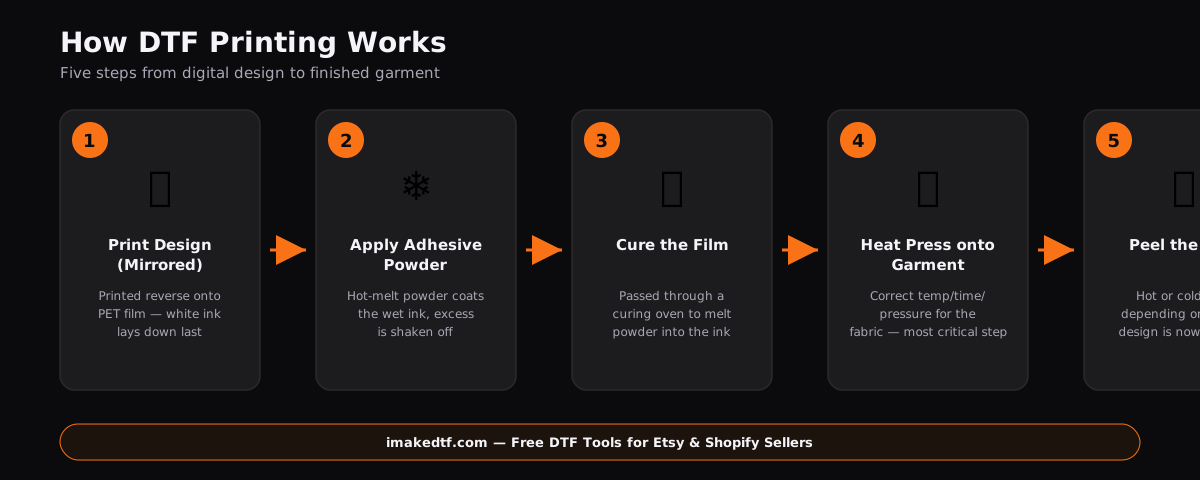
The core process has five steps, and every DTF transfer — whether it’s a single logo or a full gang sheet with dozens of designs — goes through all five in the same order:
- Print the design (mirrored) onto PET film. A DTF printer — typically a modified Epson-based piezoelectric inkjet printer running CMYK plus a dedicated white ink channel, sometimes with extra light-cyan/light-magenta channels for smoother gradients — prints the artwork in reverse onto a roll of PET transfer film, using RIP (Raster Image Processor) software to manage color profiles and white ink underlay generation. White ink prints last, as the top layer on the film, so once the transfer is flipped and pressed onto the garment, that white layer ends up sitting directly against the fabric as an opaque underbase beneath the color.
- Apply TPU adhesive powder while the ink is still wet. A thermoplastic polyurethane hot-melt powder — the same adhesive family used in flexible, wash-durable consumer plastics — is spread evenly over the printed film, usually by hand-shaking or an automated powder-shaking machine on commercial lines. Powder only adheres to the still-tacky ink; the rest shakes off and can typically be recovered and reused.
- Cure the film. The powdered film passes through a curing oven, an infrared heat tunnel, or is held under a heat gun/press at a controlled distance for 2–5 minutes at roughly 285–320°F — enough to melt the TPU powder into the ink layer and fuse it into a solid film, without fully activating its adhesive bond, so the transfer stays workable and shelf-stable until it’s actually pressed.
- Heat press the transfer onto the garment. The film is placed ink-side-down on the garment and pressed at the correct temperature, time, and pressure for that specific fabric — this step is covered in exhaustive, fabric-by-fabric detail in our DTF heat press settings guide, since getting this one step wrong is the single most common cause of a transfer failing after it was printed and cured perfectly.
- Peel the film. Depending on whether the film is hot peel or cold peel, the PET carrier is removed immediately while still warm, or after the garment has cooled to the touch — leaving the printed design fused directly into the fabric fibers.
DTF Ink and Film Technology, Explained
Most “what is DTF” guides stop at “special ink on special film.” The actual materials matter if you want to understand why DTF behaves the way it does:
The ink is a water-based pigment ink, not a dye-based or solvent ink. Pigment inks suspend solid color particles in a water carrier rather than dissolving dye molecules into it, which is why DTF prints resist UV fading better than dye-sublimation over time, and why cleanup only needs water-based cleaning solutions instead of the volatile organic compound (VOC) solvents traditional solvent-ink printing requires.
The film is PET (polyethylene terephthalate) — the same base polymer family as plastic soda bottles — coated with a release layer that lets the cured ink-and-powder layer separate cleanly from the film during peeling. Film comes in matte and glossy finishes and in different peel-temperature formulations (hot, warm, cold), a property of the film’s release coating, not something you can change by adjusting your heat press.
The adhesive powder is TPU (thermoplastic polyurethane) in the overwhelming majority of modern DTF supplies — the same flexible polymer used in athletic shoe soles and protective phone cases — chosen specifically because it survives repeated flexing and stretching without cracking, unlike the more brittle hot-melt powders used in early-generation transfer processes. Powder is sold in different micron/mesh sizes: finer powder gives smoother, softer prints suited to detailed artwork; coarser powder is cheaper and more forgiving for bold, simple designs.
What You Need to Get Started with DTF
There are two structurally different ways to participate in DTF, and which one applies to you changes what you actually need to buy.
If you’re buying transfers — the far more common starting point for Etsy and Shopify sellers — you need a heat press, blank garments, and a supplier. No printer, no film, no powder, no curing oven, no RIP software. This is the fastest and cheapest way into DTF, and it’s what most of the tools on this site are built around. Startup cost here typically runs $200–600 for a basic heat press plus whatever you spend on your first batch of blanks and transfers.
If you’re printing your own transfers, you need a DTF-specific printer (or a converted standard inkjet printer with a DTF ink system), PET film, white and CMYK pigment ink, TPU adhesive powder, a curing setup, and RIP software — a meaningfully bigger investment, typically $1,500–8,000+ depending on printer size and whether you buy new or convert an existing machine. Our DTF equipment list breaks down every piece of hardware this route requires, and the best DTF printers for small business guide compares specific models once you’re at the stage of actually buying one. Either way, budget realistically before committing — our DTF printing startup costs breakdown lays out real numbers for both paths, not marketing-page best-case figures.
Whether you print in-house or order from a supplier, printing designs individually wastes film and money. Our free Gang Sheet Builder auto-arranges multiple designs onto a single sheet using a MaxRects packing algorithm, cutting wasted film by 20–40% compared to arranging by hand.
DTF vs. Other Printing Methods
DTF sits in the middle of the garment decoration landscape — more flexible than screen printing, more durable and fabric-agnostic than sublimation, and far less finicky about fabric prep and printer maintenance than DTG. The table below is a quick comparison; each method has its own dedicated, much deeper guide linked below with real cost-per-unit numbers.
| Method | Works on Dark Fabric? | Fabric Types | Setup Cost | Best For |
|---|---|---|---|---|
| DTF | Yes (white underbase) | Cotton, poly, blends, leather, and more | Low–Medium | Small batches, on-demand, mixed-fabric orders |
| Screen Printing | Yes | Mostly cotton/blends | Medium–High per design | Large single-design runs (50+ units) |
| DTG | Limited | Cotton-heavy | High | Photo-realistic single-item prints |
| Sublimation | No (white/light only) | Polyester only | Low–Medium | All-over prints, mugs, and hard goods |
For the full comparison on each — cost per unit, durability, setup investment, and which one actually makes sense for your order volume — see DTF vs screen printing, DTF vs DTG, and DTF vs sublimation.
The Real Advantages of DTF Printing
- No pre-treatment. DTG requires spraying a pre-treatment solution onto every garment before printing, adding labor, drying time, and a visible stiff patch if applied unevenly. DTF skips this step entirely.
- Fabric-agnostic. The same transfer presses onto cotton, polyester, poly-blends, nylon, canvas, denim, fleece, and even leather with only temperature and time adjustments — no separate ink system per fabric type.
- Works on dark garments without a separate step. The white ink underbase is baked into the print itself, unlike sublimation, which physically cannot print white and is limited to light-colored polyester.
- No minimum order quantity. A single transfer costs roughly the same to produce as the 500th one, unlike screen printing, where the screen setup cost only pays off at volume.
- Sharp detail and full color gamut. As a full digital print rather than a limited number of spot-color screens, DTF reproduces gradients, photographs, and fine detail that would require expensive multi-screen setups in screen printing.
- 50+ wash durability when pressed correctly — competitive with screen printing and well ahead of budget heat-transfer vinyl.
The Honest Disadvantages of DTF Printing
Most DTF guides only list the advantages. If you’re printing your own transfers rather than buying them, these are the problems that actually show up in practice:
Printhead clogging. DTF inks are pigment-based and noticeably thicker than dye-based inks, and pigment particles settle when a printer sits idle. Left unused for even a few days, nozzles can dry and clog, requiring cleaning cycles or, in bad cases, printhead replacement — a real, recurring maintenance cost most beginner guides never mention.
Hand feel and texture. A DTF print sits as a thin film layer on top of the fabric rather than dyeing the fibers themselves (as sublimation does) or sitting flush with the weave (as a well-cured DTG print can). The result is a slightly thicker, less breathable hand feel than DTG or a soft-hand screen print — noticeable on large designs, less so on small logos.
Film and powder handling. Printed film is sensitive to dust and fingerprints before curing, and loose TPU powder makes a genuine mess if handled carelessly — commercial operations run dedicated ventilation and powder-containment setups specifically because of this.
Material cost stacking. Unlike sublimation (just ink and paper) or basic heat-transfer vinyl (just vinyl), DTF requires film, ink, and powder simultaneously, which is part of why a printed-in-house transfer often costs more per unit in materials than sublimation, even though DTF wins on fabric flexibility.
Slower per-unit output than a comparable DTG or sublimation setup for single, simple designs, since it’s a multi-material, multi-step process rather than a single pass.
Is DTF Printing Environmentally Friendly?
The honest answer is “more than plastisol screen printing, less than nothing.” DTF’s water-based pigment inks contain none of the PVC or phthalates found in plastisol screen printing ink, and there’s no screen reclaim chemistry or emulsion stripper involved — both genuine environmental wins. Printing on demand also means fewer overstocked, unsold garments ending up discarded, compared to bulk screen-printed runs that don’t sell through.
That said, DTF isn’t waste-free: PET film and TPU powder are petroleum-derived plastics, not all film and powder waste is recyclable through standard municipal streams, and curing/pressing does consume real electricity per unit compared to no-heat methods. If sustainability matters to your brand positioning, the fair claim is “lower-impact than plastisol screen printing and DTG pre-treatment sprays,” not “eco-friendly” outright — and it’s worth being precise about that distinction with customers who ask.
Common Myths About DTF Printing
“DTF only works on cotton.” False — this is arguably DTF’s single biggest advantage over both screen printing and DTG. It works across cotton, polyester, blends, nylon, and more with only temperature adjustments, covered fabric-by-fabric in our fabric compatibility checker.
“DTF and HTV (heat transfer vinyl) are the same thing.” No. HTV is a pre-cut, single-color vinyl material cut on a vinyl cutter; DTF is a full-color, printed transfer that reproduces photographs and gradients in one press, using adhesive powder rather than a heat-activated vinyl backing.
“More heat always means a stronger bond.” False, and a common cause of failed transfers — over-pressing causes dye migration on synthetics and a stiff, cracked hand feel rather than a stronger bond. Our heat press settings guide covers the exact symptom-to-fix diagnostics for this.
“All DTF film peels the same way.” False — hot peel, warm peel, and cold peel are different film chemistries requiring different timing, and using the wrong timing for your specific film is one of the most common reasons a transfer that “should have worked” lifts off with the film.
Who Is DTF Printing For?
DTF’s biggest advantage — decoupling printing from pressing — is exactly why it fits small operators so well:
- Etsy and Shopify sellers running print-on-demand shops who need to fulfill single-unit orders profitably, without holding pre-printed inventory in every size and color.
- Local decorators and sports team suppliers taking small, mixed-design batch orders that would be uneconomical to screen print.
- Anyone testing designs before committing to a bulk run, since there’s no per-design screen setup cost the way there is with screen printing.
Regardless of which of these you are, unit economics only work if you’re pricing correctly. A single small transfer can cost $2–5 on its own, so most profitable DTF sellers batch multiple designs onto shared gang sheets and calculate their actual per-unit cost before setting a price — not after.
Transfer cost, blank garment cost, and platform fees all eat into your margin differently depending on where you sell. Our DTF Price Calculator combines all three to show your minimum price, recommended sell price, and exact profit per unit — before you list anything.
Is DTF Printing Durable?
A correctly applied DTF transfer holds up for 50 or more wash cycles without cracking, fading, or peeling — but that durability depends entirely on the application step, not the printing step. The most common cause of early failure isn’t a bad transfer, it’s an incorrect heat press temperature, time, or pressure for the specific fabric, along with skipping a second “post-press” pass. Our heat press settings guide covers exact temperature charts by fabric type and the second-press technique that fixes most peeling problems before they start.
Before pressing onto an unfamiliar fabric, it’s worth checking compatibility first — some fabrics (waterproof or DWR-coated shells, for example) simply won’t hold a DTF transfer no matter how the settings are adjusted.
Not every fabric takes DTF the same way. Our Fabric Compatibility Checker covers 14 common fabric types and tells you upfront whether DTF will work, what pre-treatment (if any) is needed, and how many washes to expect.
Starting a DTF Business: What to Know Before You Commit
DTF’s low barrier to entry is exactly why so many people start with it — but “low barrier” doesn’t mean “no planning.”
There isn’t one single way to run a DTF business — custom one-off orders, wholesale transfer supply, and print-on-demand fulfillment are structurally different businesses with different customers and different margins, and picking the wrong one for your situation is a common early mistake. Our DTF business models comparison breaks down the economics of each.
If you’re planning to run this from home, starting a DTF transfer business from home covers the full step-by-step setup, and it’s worth reading before you buy anything, since legal requirements for starting a DTF business and DTF business insurance both cover ground that’s easy to overlook when you’re focused on equipment and orders instead of the business side.
Frequently Asked Questions
Is DTF printing the same as heat transfer vinyl (HTV)?
No. HTV is a pre-cut, single-color vinyl material cut on a vinyl cutter, while DTF is a full-color, printed transfer that can reproduce photographs, gradients, and complex designs in one press.
Do I need a special printer for DTF?
Only if you’re printing your own transfers. If you’re buying pre-printed transfers or gang sheets from a supplier, a standard heat press is the only equipment you need — see our equipment list for the full breakdown of both paths.
How much does DTF printing cost per shirt?
Individual transfers typically run $2–5 depending on size, but that drops to $0.50–1.50 per design when multiple designs are combined onto a gang sheet. Use the DTF price calculator for an exact number based on your actual costs and target margin.
Can DTF be printed on dark or black garments?
Yes — DTF transfers include a white ink underbase printed beneath the color layer specifically so designs show up clearly on dark fabric, unlike sublimation, which only works on white or very light garments.
Why does my DTF printer keep clogging?
Pigment-based DTF ink is thicker than dye ink and settles when the printer sits idle. Run a daily nozzle check and short cleaning cycle even on days you’re not printing — this is a maintenance reality of the technology, not a sign of a defective machine.
How long does a DTF transfer last?
A correctly pressed transfer typically survives 50+ wash cycles without cracking or peeling, provided it was pressed at the right temperature and time for the fabric and given at least 24 hours to cure before the first wash.
Is DTF printing eco-friendly?
It’s a genuine improvement over plastisol screen printing (no PVC, no phthalates, no screen reclaim chemicals) and DTG pre-treatment sprays, but PET film and TPU powder are still petroleum-based plastics — “lower-impact,” not “zero-impact,” is the accurate claim.