What Ink Is Used for DTF Printing? Full Breakdown
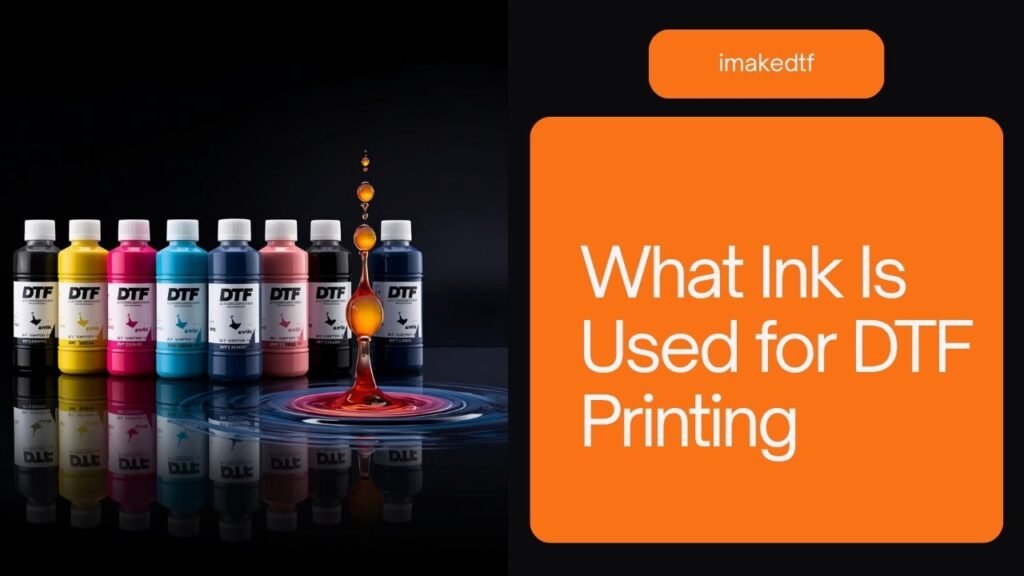
What ink is used for DTF printing? DTF printing uses a water-based pigment ink system — typically CMYK plus a dedicated white channel — with a viscosity engineered to roughly 3.5–6 mPa·s at 22°C and pigment particles milled down to somewhere between 50–300 nanometers, small enough to pass through inkjet nozzles without clogging but large enough to keep colors dense and opaque on fabric. That’s a much more specific answer than “special ink,” and understanding the actual chemistry of DTF ink explains almost every common production problem — clogging, fading, white ink settling — that DTF ink causes when it isn’t handled correctly.
This guide goes deep on DTF ink specifically: what it’s made of, why white DTF ink behaves so differently from color DTF ink, water-based versus eco-solvent DTF ink, how long DTF ink actually lasts on the shelf, and whether a bulk DTF ink system is worth it over cartridges. For the broader production picture, see How Are DTF Transfers Made? and our What Is DTF Printing? overview.
What Is DTF Ink Made Of?
DTF ink is a water-based pigment ink — not a dye-based ink and not a solvent ink. That distinction matters more than most guides explain: dye-based ink dissolves color molecules directly into a liquid carrier, while pigment-based DTF ink suspends solid, micronized color particles in that carrier instead. Those particles sit on top of the fabric surface once cured rather than soaking into the fibers, which is exactly why DTF ink produces opaque, vivid color on dark fabric where a dye-based process simply couldn’t.
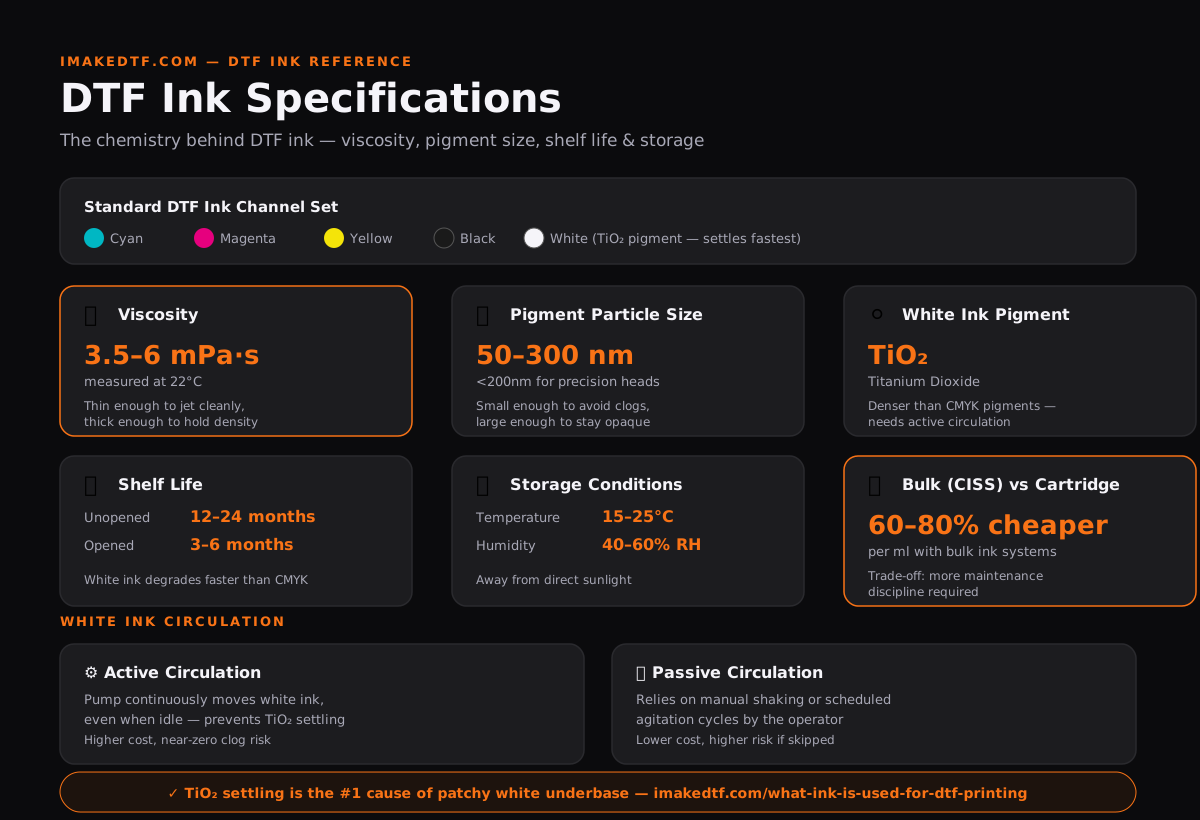
The pigment particles in DTF ink are milled down to somewhere between 50 and 300 nanometers — fine enough to pass cleanly through an inkjet nozzle without clogging it, but coarse enough to retain color density and opacity once printed. Viscosity is just as tightly controlled: DTF ink typically sits around 3.5–6 mPa·s at 22°C, thin enough to jet reliably through the printhead but thick enough that it doesn’t drip or bleed on the film before curing. Get either of these specs wrong — cheap, poorly milled DTF ink, or DTF ink stored outside its intended viscosity range — and the printer either clogs or the print looks soft and underwhelming regardless of how good the printhead is.
CMYK DTF Ink vs. White DTF Ink: Why They’re Not the Same Product
A DTF printer runs at least five ink channels — cyan, magenta, yellow, black, and white — and treating “DTF ink” as one uniform product misses the most important practical difference in the whole system: white DTF ink is chemically different from CMYK DTF ink, not just a different color of the same formula.
White DTF ink gets its opacity from titanium dioxide (TiO₂), a pigment that’s significantly denser and heavier than the pigments used in CMYK DTF ink. That density is exactly why white DTF ink settles in its tank or ink line within hours of sitting still, separating the heavy TiO₂ particles from the liquid carrier — while CMYK DTF ink can sit far longer without the same problem. This is the real, chemical reason every serious DTF setup uses some form of white ink circulation or agitation system: without it, TiO₂ particles settle to the bottom of the tank, the printer pulls thin, under-pigmented white ink first, and the result is patchy, low-opacity white underbase on the finished print — a defect that traces back entirely to ink chemistry, not printer calibration.
There are two circulation approaches used across DTF printers: active circulation, where a small pump continuously moves white DTF ink through the line even when the printer is idle, and passive circulation, which relies on manual shaking or periodic agitation cycles the operator has to remember to run. Active systems cost more upfront but virtually eliminate white ink settling as an ongoing maintenance headache; passive systems are cheaper but put the burden on the operator’s discipline, and a missed agitation cycle is one of the most common reasons a otherwise well-maintained printer suddenly produces washed-out prints on dark garments.
Water-Based DTF Ink vs. Eco-Solvent Ink
Nearly all modern DTF ink is water-based, and it’s worth understanding what that actually buys you compared to the eco-solvent ink used in some other printing applications. Water-based DTF ink emits far fewer volatile organic compounds (VOCs) than solvent-based alternatives, is close to odorless, and cleans up with water-based solutions rather than chemical solvents — all genuine advantages for a small shop without industrial ventilation. Historically, water-based DTF ink lagged solvent formulas on wash durability, but resin chemistry and pigment dispersion have advanced enough that well-formulated modern water-based DTF ink routinely holds up for 50+ wash cycles, closing a gap that used to be a real trade-off.
Eco-solvent ink, by contrast, is built for non-porous substrates — vinyl, banners, rigid signage — and isn’t formulated for the fabric-bonding chemistry DTF requires. The two ink types aren’t really competing for the same job: DTF ink is built specifically for textile transfer bonding, and eco-solvent is built for hard, non-porous surfaces. If a supplier or printer conversion kit ever offers you “eco-solvent DTF ink” as a cost-saving substitute, that’s a red flag rather than a genuine alternative.
How Long Does DTF Ink Last? Shelf Life and Storage
DTF ink has a real, finite shelf life, and how you store it changes that number significantly. Unopened DTF ink typically holds its formulation for 12–24 months from manufacture. Once opened and loaded into a printer or bulk system, that window shrinks to roughly 3–6 months of reliable performance — pigment dispersion degrades faster once the ink is exposed to air and light on a regular basis, and white DTF ink in particular loses shelf life faster than CMYK due to that same TiO₂ settling tendency discussed above.
Storage conditions matter more than most sellers realize: DTF ink should be kept between 15–25°C (59–77°F) and at 40–60% relative humidity, away from direct sunlight. Ink stored in a hot garage through summer, or in a printer that sits in direct window light, will degrade well before its printed shelf-life date — and degraded DTF ink doesn’t always fail obviously; it can print noticeably duller colors or a less opaque white underbase weeks before it clogs a nozzle outright.
Bulk DTF Ink Systems (CISS) vs. Cartridges
Once you’re printing DTF ink at meaningful volume, the choice between cartridge-based ink delivery and a bulk continuous ink supply system (CISS) becomes a real cost decision. Bulk DTF ink systems — large refillable tanks feeding the printer continuously — typically cost 60–80% less per milliliter of ink than pre-filled cartridges, which adds up fast for anyone printing daily rather than occasionally.
The trade-off is maintenance discipline: a bulk DTF ink system exposes the ink supply to more dust and air contamination than a sealed cartridge, and performance depends heavily on how consistently the operator monitors ink levels, circulation, and line cleanliness. Most serious DTF setups run bulk systems with a dedicated tank per CMYK color, a separate white ink tank with active circulation, and a waste ink collection tank — the same configuration that helps prevent the white-ink-clog problem described above. For a hobbyist printing a handful of transfers a week, cartridge-based DTF ink is often the more sensible choice specifically because it sidesteps that maintenance burden entirely.
Common DTF Ink Problems and What They Actually Mean
Most ink-related DTF printing problems trace back to one of the chemistry issues covered above, not a defective printer:
Faded or dull colors on a print that looked fine last week usually means the DTF ink has aged past its effective shelf life, or has been stored somewhere too warm — check both before assuming a printhead problem.
Patchy, low-opacity white underbase on dark garments is almost always TiO₂ settling in the white DTF ink line — run (or fix) your circulation/agitation routine before troubleshooting anything else.
Nozzle clogging after a few idle days is a direct consequence of DTF ink’s pigment-suspension chemistry — the solid particles settle and dry faster than a dye-based ink would, which is why daily nozzle checks matter even on days you don’t print (this ties directly into the production-line quality control practices covered in How Are DTF Transfers Made?).
Colors that don’t match what’s on screen is frequently an ink-and-profile mismatch rather than an ink defect — different DTF ink formulations require their own RIP color profile, and using a generic profile with a specific ink brand is a common, invisible source of color drift.
DTF ink can’t always reproduce every color exactly as it appears on screen — especially very saturated oranges and neons. Our Color Match Checker shows how your RGB color will actually print with DTF ink, accounting for ink gamut limits and white underbase effects on dark garments.
Does DTF Ink Choice Affect Wash Durability?
Yes, independently of the heat press settings used to apply the transfer. Cheap, poorly formulated DTF ink can under-perform on wash durability even when every other step — curing, pressing, peeling — was done correctly, because the resin binders that hold pigment to the fabric after curing vary meaningfully between ink formulations. This is a genuinely underreported point: most “why is my DTF transfer peeling” advice focuses entirely on heat press settings (covered in full in our heat press settings guide) and skips the possibility that the ink itself is the weak link. If you’ve dialed in temperature, time, and pressure correctly per that guide and are still seeing early failures across an entire batch, the DTF ink or the powder it’s paired with — not your press — is the more likely culprit.
Should You Care What DTF Ink Your Supplier Uses?
If you’re buying finished transfers rather than printing your own, you can’t control which DTF ink a supplier runs — but you can ask, and the answer tells you something real. A supplier using a well-known, established DTF ink brand with an active white ink circulation system is far less likely to hand you transfers with patchy white underbase or premature fading than one running unbranded, bargain-bin ink with no circulation system at all. If you’re evaluating a new supplier, a small test order pressed onto a scrap fabric sample — checking specifically for opaque, even white underbase and color accuracy against your original file — reveals ink quality issues faster than any spec sheet a supplier hands you.
Frequently Asked Questions
Is DTF ink toxic or hazardous?
Modern DTF ink is water-based pigment ink with low VOC emissions, generally considered low-hazard for typical shop use — but it still shouldn’t be treated as food-safe or skin-safe, and basic ventilation is still recommended, especially in enclosed spaces.
Why does my white DTF ink keep clogging but not my CMYK?
White DTF ink uses titanium dioxide as its pigment, which is denser and settles faster than the pigments in CMYK ink. Without active or regular manual circulation, TiO₂ settles out and clogs lines and nozzles far more readily than color ink does.
Can I mix DTF ink from different brands?
It’s not recommended. Different DTF ink formulations are chemically tuned to specific viscosity and pigment-dispersion targets, and mixing brands can cause unpredictable clogging, color shifts, or reduced wash durability — even when each ink works fine on its own.
How much DTF ink does one shirt design actually use?
It varies heavily by design size and color density, but a typical chest-sized design uses a small fraction of a milliliter of combined CMYK and white ink — which is why bulk ink systems pay for themselves quickly at real production volume despite the higher upfront cost.
Does DTF ink expire, and can I still use expired ink?
Yes, DTF ink degrades over time — unopened ink is generally reliable for 12–24 months, opened ink for roughly 3–6 months. Expired ink doesn’t always fail obviously; it often just prints duller or less opaque before it clogs outright, so color accuracy problems are worth checking against ink age before assuming a hardware issue.