Best DTF Ink Brands: 10 Top-Rated Picks for 2026
Best DTF ink brands, ranked: across ten brands worth knowing, DuPont Artistri (P1600 series) and STS Inks lead the industrial tier for white ink stability and printhead compatibility, Image Armor, FIREBIRD, Total Ink Solutions, and InkTec form a strong mid-tier for growing shops, and Color Prime Chroma, ProColor, and Wellye round out the newer and budget-friendly options. Below is the full ranked breakdown with real pros, cons, and links to each brand’s official site — no affiliate relationships, imakedtf.com doesn’t sell ink.
For the underlying chemistry every one of these brands is working with, see What Ink Is Used for DTF Printing? and What Is DTF White Ink?. This ranking weighs white ink stability, printhead compatibility, documented specs, and independently reported real-world performance — not just marketing copy
Best 10 DTF Ink Brands
1. DuPont Artistri (P1600 Series)
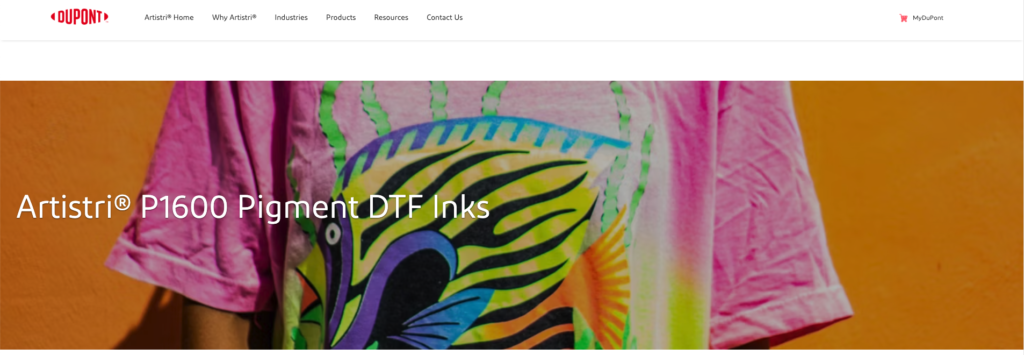
DuPont’s P1600 series is the name that comes up most often when experienced operators talk about industrial-grade DTF ink, and the reputation is earned largely through white ink performance — it delivers strong opacity even on the darkest fabrics, which is the single hardest thing for any DTF ink brand to get consistently right.
Pros: Excellent white ink opacity on dark garments; non-hazardous formulation with no ethylene glycol; compatible with the widest printhead range of any brand here (DX4, DX5, DX7, and I3200); backed by DuPont’s decades of industrial ink R&D.
Cons: Sits at the top of the premium price tier; sold mainly in 1-liter, 2×10-liter, and 200-liter drum sizes, which makes small-batch testing less convenient; genuinely overkill for a low-volume hobbyist setup.
Best for: High-volume production shops running I3200 printheads that can’t tolerate white ink inconsistency.
DuPont’s official product page includes downloadable technical datasheets and application guides — worth reviewing before you buy if you want the exact viscosity and compatibility specs in writing.
2. STS Inks
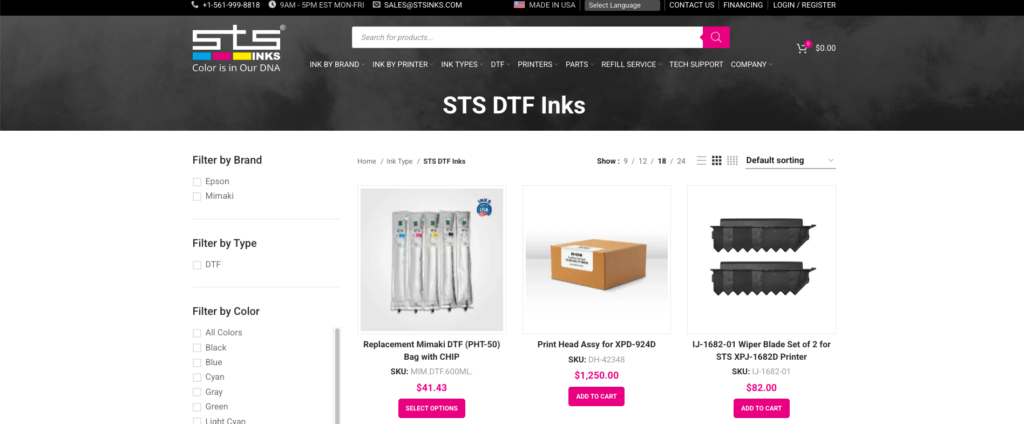
STS is a US-manufactured DTF ink brand built specifically around Epson desktop-converted printer systems, and it’s one of the few brands that backs its ink with the printer’s own printhead warranty — a meaningful signal of confidence in formulation quality.
Pros: Manufactured in the USA; formulated specifically for 6-to-8-color Epson desktop systems; backed by STS’s own printhead warranty; documented 1-year shelf life.
Cons: Less documented performance data for large-scale I3200 industrial production lines compared to desktop setups; pricing sits mid-to-premium.
Best for: US-based shops that want domestic manufacturing and a printhead warranty backing their ink choice.
STS publishes their DTF ink lineup directly on their product category page, including cartridge options sized for desktop-converted printer systems.
3. Nazdar
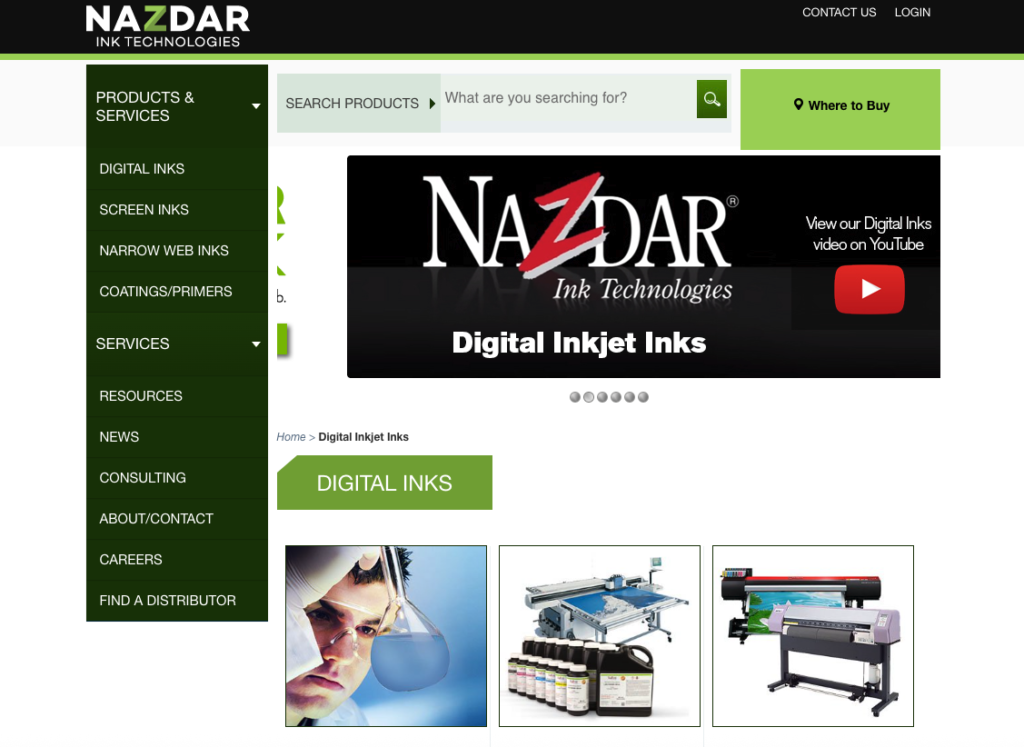
Nazdar brought decades of industrial screen-printing ink expertise into DTF, and that pedigree shows in a reputation for toughness and reliability rather than flashy marketing claims.
Pros: Decades of industrial ink manufacturing experience; strong reputation for durability; more eco-conscious formulation relative to some industrial peers; global distribution through Nazdar’s SourceOne platform.
Cons: Less DTF-specific brand recognition than dedicated DTF-only brands; DTF-specific documentation is spread across Nazdar’s broader screen-print/DTG/DTF product catalog, making it slightly harder to find DTF-specific specs quickly.
Best for: Shops that already trust Nazdar’s screen-printing ink line and want formulation consistency across their whole operation.
Nazdar’s digital inkjet ink catalog covers their full DTF lineup alongside their broader screen-printing and DTG ink range.
4. Image Armor
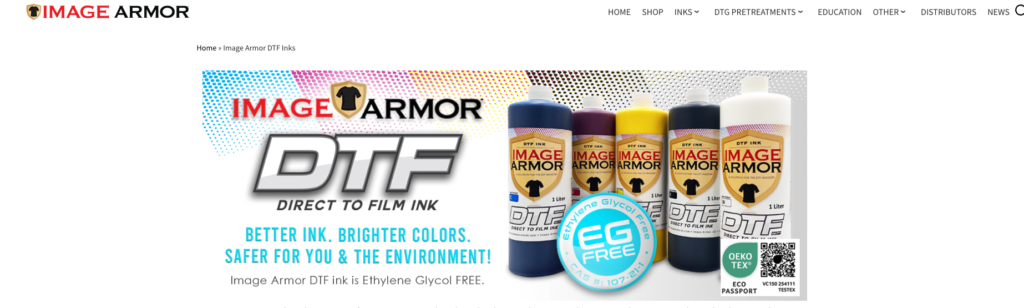
Image Armor built its name in DTG pretreatment and ink before expanding into DTF, and that heritage shows up specifically in fast curing performance and vibrant color output.
Pros: Frequently praised for bold color output and notably fast curing; high-opacity white ink on dark textiles; documented 1-year shelf life when sealed; sells direct through their own manufacturer web store.
Cons: DTF is a newer addition to a product line built primarily around DTG; mid-tier pricing rather than budget.
Best for: Shops where oven/curing throughput — not print speed — is the actual production bottleneck.
Image Armor sells DTF ink direct through their manufacturer store, alongside their established DTG ink and pretreatment lines.
5. FIREBIRD DTF Ink
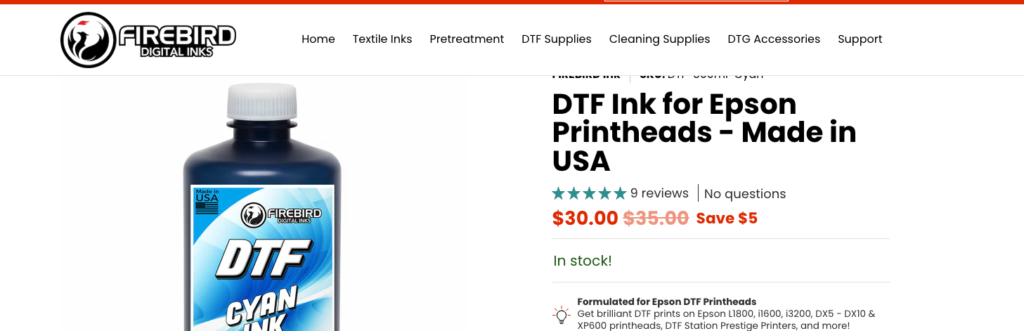
FIREBIRD positions itself specifically on USA manufacturing and batch-to-batch consistency — a direct response to a common complaint about overseas suppliers with unpredictable quality control.
Pros: USA-made with an emphasis on consistency; strong documented opacity; universal formulation compatible with most Epson-printhead-based DTF printers; matching film and powder available for a full-system approach.
Cons: Smaller, newer brand relative to DuPont or Nazdar’s decades-long track record; fewer independent third-party reviews currently available to verify marketing claims.
Best for: Shops that have been burned by inconsistent overseas ink suppliers and want a documented USA-made alternative.
FIREBIRD’s DTF ink product page details their USA manufacturing and universal Epson-printhead compatibility.
6. Total Ink Solutions (Cybor Stroke)
Total Ink Solutions leans harder into eco-certification and documented wash durability than aggressive color-vibrancy marketing, which is a deliberate positioning choice worth noting.
Pros: Eco-certification emphasis; wash durability specifically tested past 60 wash cycles; large established customer base; multiple US warehouse locations for faster shipping.
Cons: Marketed heavily alongside their own Cybor printer/shaker hardware, so less independent documentation exists for how it performs specifically on third-party printers.
Best for: Shops that want wash-durability guarantees and sustainability credentials to use in their own customer-facing marketing.
Total Ink Solutions’ DTF supplies collection covers their Cybor Stroke ink line alongside compatible film and powder.
7. InkTec
InkTec’s DTF ink is developed by an in-house R&D team and covers one of the widest printhead compatibility ranges on this list, making it a flexible pick for a variety of desktop-converted setups.
Pros: Wide printhead compatibility (F1080, P600, I3200, I1600, DX4 through DX6); documented smooth ink flow from dedicated in-house testing; strong documented adhesion and soap/water resistance.
Cons: Regional site fragmentation (separate Europe and India storefronts) makes it slightly less straightforward to find one authoritative source depending on where you’re buying from; less prominent in US-specific DTF ink comparisons than STS or DuPont.
Best for: XP600-based desktop-converted printer setups, particularly for shops outside the US.
InkTec’s direct-to-film ink page details printhead compatibility and adhesion performance specs.
8. Color Prime Chroma
Chroma is the newest entrant on this list, and it’s built its early reputation specifically around two things most DTF ink brand reviews complain about most: clogging and narrow color gamut.
Pros: Marketed 10% wider color gamut than standard DTF ink; engineered specifically to reduce clogging and “ink starvation,” with field-reported reductions in these exact failure modes; smoother gradient handling reported by early users.
Cons: As of this writing, a dedicated Chroma white ink is still in development — Chroma currently launches in CMYK only, meaning you’d pair it with a separate “Standard” white ink rather than a matched Chroma white; shorter track record than the established industrial brands on this list.
Best for: Shops chasing wider color gamut and fewer clogging issues who don’t mind running a separate white ink until dedicated Chroma White ships.
Color Prime’s Chroma page has the latest details on CMYK availability and the white ink’s development timeline.
9. ProColor (Procolored)
ProColor ink is inseparable from ProColor’s own closed-system printers — you don’t choose this ink independently of the hardware, which is worth understanding before you fall in love with the price point.
Pros: Anti-clog white ink formula specifically engineered to hold opacity across long print runs; low-cost entry point; simple compatibility across ProColor’s whole printer lineup (F8, F13, F13 Pro, P13, K8, K13); accessible 250ml/500ml bottle sizes for testing.
Cons: Closed system — only works with Procolored’s own printers, no flexibility to shop competing ink brands; budget-tier formulation generally trades some consistency for price; not built for high-volume industrial production.
Best for: Hobbyists and small businesses already running (or planning to run) a Procolored printer.
Procolored’s ink collection covers their full DTF, UV DTF, and DTG ink lineup, all engineered specifically for their own closed-system printers.
10. Wellye
Wellye sits at the accessible end of the pricing spectrum, positioned specifically as a low-risk way to validate whether DTF printing is worth further investment before committing to premium ink pricing.
Pros: Bold, consistent CMYK tones across fabric types at a lower price point; positioned specifically for testing the DTF workflow without a big upfront ink investment.
Cons: Less independent third-party verification available compared to established industrial brands; budget-tier ink generally carries higher clog risk than mid-tier or premium options.
Best for: First-time DTF operators validating the workflow before committing to premium ink pricing.
Wellye’s site covers their broader DTF supplies lineup, including their entry-level CMYK and white ink options.
Quick Comparison
| # | Brand | Tier | Notable Strength |
|---|---|---|---|
| 1 | DuPont Artistri P1600 | Industrial | Best-in-class white opacity, widest printhead range |
| 2 | STS Inks | Industrial | US-made, printhead warranty backed |
| 3 | Nazdar | Industrial | Screen-print heritage, durability |
| 4 | Image Armor | Mid-tier | Fast curing, vibrant color |
| 5 | FIREBIRD | Mid-tier | USA-made consistency |
| 6 | Total Ink Solutions | Mid-tier | Eco-certified, 60+ wash durability |
| 7 | InkTec | Mid-tier | Widest printhead compatibility |
| 8 | Color Prime Chroma | Emerging | Wider gamut, anti-clog focus |
| 9 | ProColor | Budget (closed-system) | Low cost, anti-clog white |
| 10 | Wellye | Budget | Lowest-risk entry point |
Ink brand and tier directly affect your cost per transfer. Our DTF Price Calculator combines your actual ink, film, and powder costs with platform fees to show your real minimum price and profit per unit.
Before You Buy: Red Flags Across Any Brand
Regardless of which brand you’re considering, a few warning signs apply universally: no published viscosity or particle size spec, no safety data sheet (SDS) available on request, pricing dramatically below the roughly $30/liter budget-tier floor, or no guidance at all on white ink circulation and agitation — see our DTF white ink guide for why that last point matters so much. Any of these should give you pause before committing to a bulk order.
It’s also worth avoiding mixing brands within the same ink lines or topping off one brand’s cartridge with another — different formulations have different viscosity targets and white ink chemistry, and mixing them can cause unpredictable clogging or color drift even when each ink performs fine independently.
Frequently Asked Questions
Which DTF ink brand has the best white ink?
DuPont Artistri’s P1600 series and Procolored’s anti-clog white formula are both specifically documented for strong, consistent opacity — DuPont for industrial I3200 production, Procolored for their own closed-system desktop printers.
Is a more expensive DTF ink brand always the better choice?
Not necessarily. Premium industrial brands like DuPont and STS earn their price through batch-to-batch consistency at high volume — a hobbyist running occasional small orders may never encounter the problems that pricing solves.
Can I use any of these ink brands with a closed-system printer like Procolored or Mimaki?
No. Closed-system printers require their own manufacturer’s branded ink. Only the brands on this list marked as open-system compatible (DuPont, STS, Nazdar, Image Armor, FIREBIRD, Total Ink Solutions, InkTec, and Chroma) work across multiple printer brands.
Are any of these DTF ink brands better for eco-conscious print shops?
Total Ink Solutions and DuPont Artistri both lead specifically on eco-certification and lower-hazard formulation compared to some competitors on this list, which is worth highlighting if sustainability matters to your customer base.
How do I know if a brand not on this list is trustworthy?
Apply the same red-flag checklist above — request a viscosity spec, particle size range, and SDS. A legitimate manufacturer can produce all three without hesitation.