Best DTF Printers for Small Business in 2026: Complete Buyer’s Guide
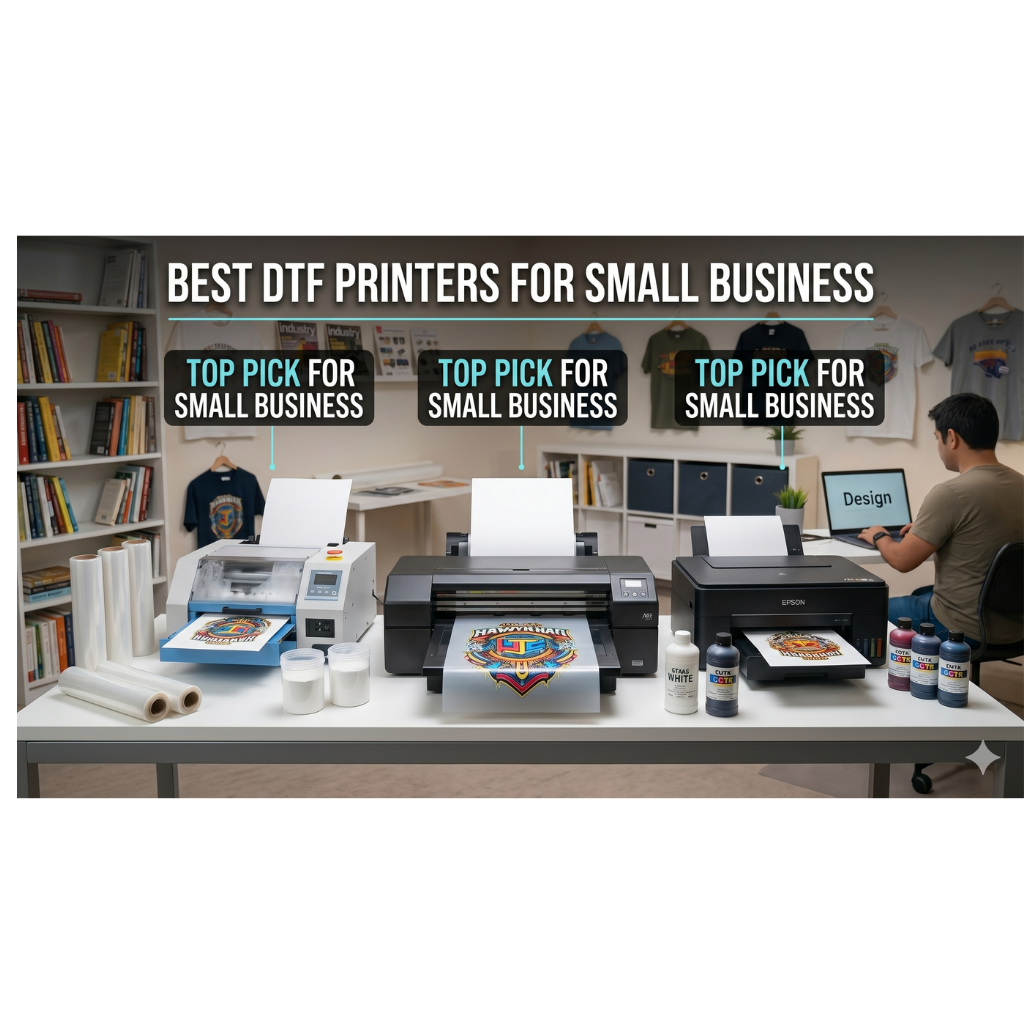
Choosing the best DTF printer for small business is the single most important decision you will make as a custom apparel entrepreneur in 2026 — and it is also the one most beginners get wrong. With more than 60 active DTF printer brands now competing for your money, the gap between a smart buy and an expensive mistake has never been wider. This guide compares the top entry-level, mid-range, and premium DTF printers small businesses are actually buying in 2026, breaks down printhead choices (XP600 vs i3200 vs i1600), and shows you how to match printer capacity to your real production needs — not the inflated speed numbers on a spec sheet.
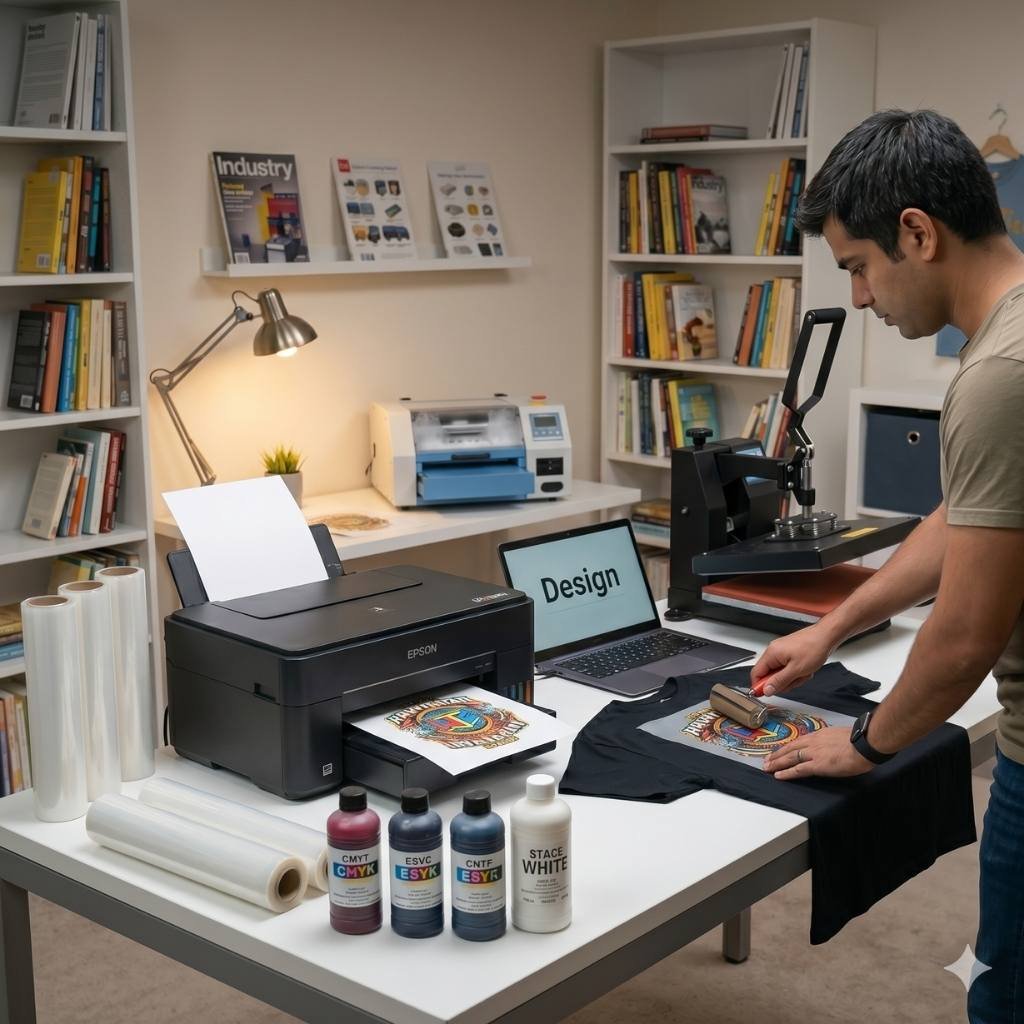
What Makes a DTF Printer “Best” for Small Business in 2026?
Before comparing specific models, it helps to know what actually separates a reliable DTF printer for small business from one that becomes a $4,000 paperweight in twelve months. Five factors matter more than anything else in 2026.
Print Quality and Color Consistency
The visible quality of a DTF transfer comes down to three things: printhead resolution, ink quality, and white ink layer control. A printer that produces vibrant colors on day one but cannot maintain consistency across a 50-sheet batch will cost you customers. Look for printers with PrecisionCore-class printheads (Epson XP600, i1600, i3200), proper white ink circulation, and OEM-grade pigment ink compatibility.
Production Speed (Real, Not Marketed)
Manufacturers love to advertise peak throughput numbers measured in square feet per hour. In real shop conditions — with multi-design gang sheets, color changes, and white underbase — most A3 single-head DTF printers produce 10–16 finished transfers per hour, while dual-head A2 systems hit 40–60 shirts per hour. Always discount the manufacturer’s stated speed by 30–40% when planning capacity.
Reliability and Maintenance Burden
A DTF printer that needs daily 30-minute cleaning cycles is not the same investment as one that needs a 5-minute weekly maintenance routine. The hidden cost of an unreliable printer is your time. Look for printers with automated white ink circulation, capping station design that prevents nozzle dry-out, and clear maintenance protocols documented by the manufacturer.
Supplier Support and Parts Availability
This is the single most overlooked factor when buying a DTF printer for small business. A great printer with no US-based technical support and a 4-week wait for replacement printheads will damage your business more than a mediocre printer with same-week support. Always verify warranty terms, replacement part lead times, and where the supplier’s technical team is located before you buy.
Total Cost of Ownership (TCO)
The sticker price is only the start. Ink, film, powder, printhead replacement, RIP software, and maintenance kits add up to thousands per year. The best DTF printer for small business is the one with the lowest 3-year TCO at your expected production volume — not the cheapest one on day one.
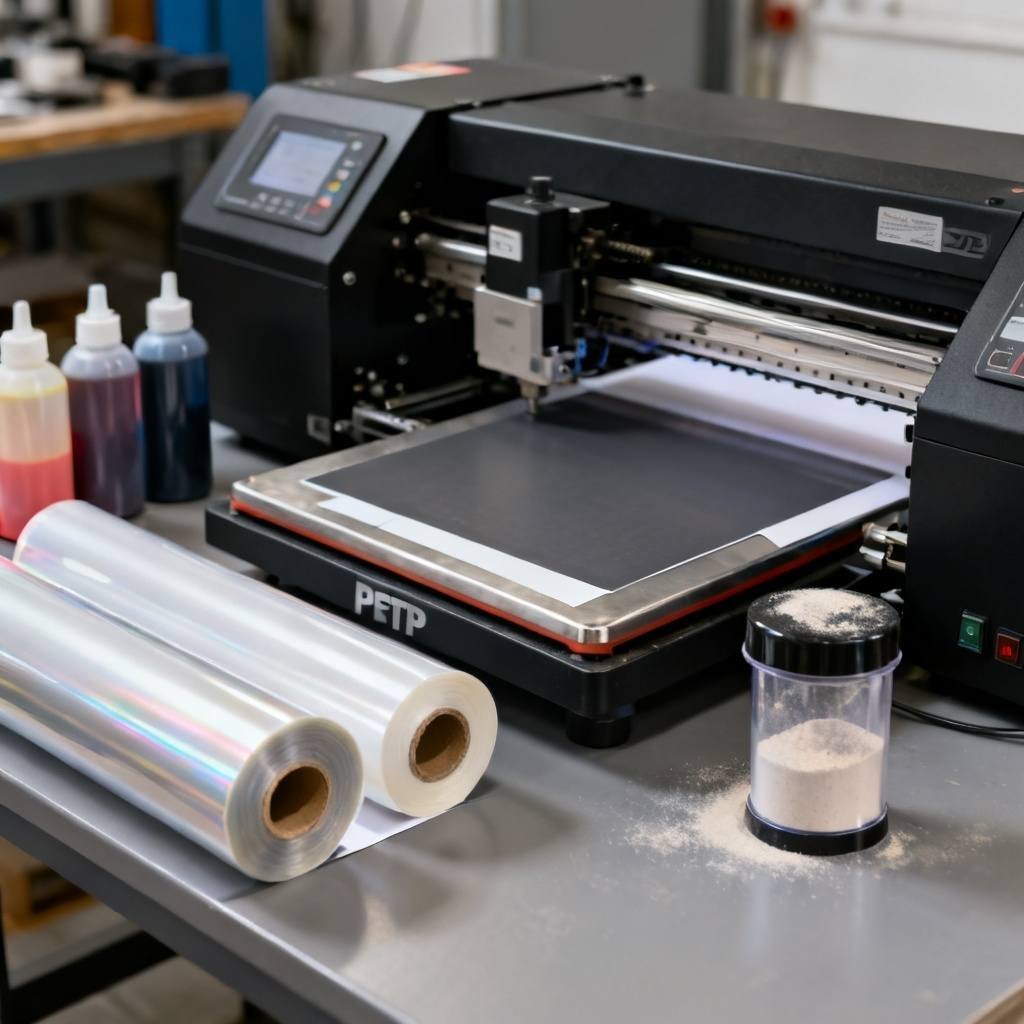
Top DTF Printers for Small Business in 2026 (Quick Comparison)
The table below summarizes the most popular DTF printers small businesses are buying in 2026, organized by tier. Detailed profiles follow in the sections below.
| Printer Model | Format | Printhead | Real Speed | Price (USD) | Best For |
| Modified Epson L1800 | A3 | XP600 (single) | 8–12/hr | $1,800–$2,500 | Side hustle, testing |
| A-SUB A3 DTF Printer | A3 | XP600 (dual) | 12–16/hr | $2,200–$2,800 | Entry-level home shops |
| Procolored A3 DTF | A3 | XP600 | 10–14/hr | $2,400–$3,200 | First serious purchase |
| LINKO KM602 | A3+ | i3200 (single) | 16–22/hr | $3,800–$4,800 | Growing home business |
| Subli-Star DTF-A3 Star IV | A3+ | i3200 (single) | 18–24/hr | $4,200–$5,500 | Reliable mid-range |
| Epson SureColor F1070 | A4 | PrecisionCore (DTG/DTF) | 14–20/hr | $6,500 | Hybrid DTG/DTF brands |
| xTool Apparel Printer | A2 | i1600 (dual) | 30–45/hr | $7,500–$9,500 | E-commerce scale-ups |
| DTF Station Prestige L2 | 16″ Roll | i3200 (dual) | 40–60/hr | $15,000–$20,000 | Established small shops |
| LINKO K-60 | 24″ Roll | i3200 (2–5 heads) | 50–100/hr | $14,000–$28,000 | Wholesale/B2B operators |
Prices reflect 2026 US market data based on direct supplier quotes and authorized dealer pricing. Speeds are real-world finished-transfer estimates, not peak printhead throughput.
Best Entry-Level DTF Printers Under $3,000
The under-$3,000 tier is where most beginners enter the DTF business. These printers can absolutely produce sellable transfers, but they require more hands-on time and have shorter printhead lifespans than mid-range alternatives. They are best treated as a 6–12 month proving ground.
Modified Epson L1800 (XP600 Conversion)
The L1800 conversion is the most common entry point in DTF printing. It uses a converted Epson L1800 photo printer with an XP600 printhead, retrofitted for white ink circulation. At $1,800–$2,500, it delivers print quality nearly indistinguishable from printers costing 3x more — but with significantly higher maintenance demands.
Strengths: Lowest entry cost, well-documented community troubleshooting, abundant aftermarket parts.
Weaknesses: XP600 printhead lifespan of 3–6 months under heavy use, manual white ink agitation often required, no manufacturer warranty on conversions.
Best for: Operators testing the business model before committing larger capital, crafters transitioning to a small business.
A-SUB A3 DTF Printer (Dual XP600)
A-SUB has become a recognizable budget brand, and their A3 dual XP600 model is one of the most-reviewed entry-level DTF printers in 2026. Two XP600 printheads operating in tandem deliver real throughput closer to 12–16 transfers per hour — a meaningful jump over single-head L1800 conversions.
Strengths: Faster than single-head L1800, includes starter ink and film kit, ships with basic RIP software.
Weaknesses: Two XP600 heads means double the printhead replacement frequency, support documentation is thin, customer service response times can stretch to 5–7 days.
Best for: First-time buyers who want a “real” branded printer without breaking $3,000.
Procolored A3 DTF Printer
Procolored is one of the more visible direct-to-consumer DTF brands in the US market, with strong YouTube presence and a one-year warranty on most units. Their A3 single-head XP600 model sits in the $2,400–$3,200 range and is designed for hobbyists transitioning into small business operation.
Strengths: US-based warranty, good unboxing/setup experience, beginner-friendly software.
Weaknesses: White ink system requires more daily maintenance than mid-range competitors, replacement parts are direct-from-China lead times if not stocked locally.
Best for: Buyers who value warranty and brand presence over absolute lowest price.
Best Mid-Range DTF Printers for Small Business ($3,000–$8,000)
The $3,000–$8,000 tier is where serious small business operators begin. These printers use industrial-grade i3200 printheads, have meaningfully better white ink circulation systems, and offer 12–18 month printhead lifespans under normal use — not 3–6 months.
LINKO KM602 (Single i3200)
The LINKO KM602 is one of the best-reviewed single i3200-head DTF printers for small business in 2026. At $3,800–$4,800 it sits at the entry point of the i3200 tier, and offers a meaningful step up in print quality, speed, and reliability over any XP600 system.
Strengths: Industrial i3200 printhead with 12–18 month lifespan, automated white ink circulation, factory-installed white ink agitator, clear maintenance documentation.
Weaknesses: A3+ format only — not suitable for printing transfers larger than 13″ wide, RIP software is functional but not as refined as Kothari or CADlink.
Best for: Home-based operators producing 50–150 transfers per week who want the i3200 reliability without the dual-head price tag.
Subli-Star DTF-A3 Star IV (Single i3200)
The Subli-Star DTF-A3 Star IV is widely considered one of the most reliable single-head A3+ DTF printers for small businesses in 2026. It is built on a proven i3200 platform with a strong white ink delivery system and benefits from one of the longest-running supplier networks in the DTF space.
Strengths: Excellent white ink reliability, well-supported in the US through several authorized dealers, includes upgraded ink dampers, faster throughput than the LINKO KM602 in most production tests.
Weaknesses: Higher entry price than competitors, ships with no included ink starter kit at base SKU.
Best for: Small businesses that prioritize reliability and uptime over saving an extra $500.
Epson SureColor F1070 (DTG/DTF Hybrid)
The Epson SureColor F1070 deserves its own category. It is the only mainstream DTG/DTF hybrid printer from a tier-one manufacturer with full US warranty support. At approximately $6,500 it sits at the top of the mid-range tier, and is the right answer for small businesses that want to print directly on garments and offer DTF transfers from one machine.
Strengths: Genuine Epson manufacturer warranty and US technical support, PrecisionCore Micro TFP printhead with Nozzle Verification Technology, vendor-supported ink system, no white ink agitation required.
Weaknesses: Limited to A4 print size (10″ x 12″), not suitable for production volumes above 200 shirts per month, ink cost per mL is higher than aftermarket alternatives.
Best for: Small businesses that need OEM reliability and offer both DTG and DTF as services to their customers.
Best Premium DTF Printers for Growing Small Business ($8,000–$25,000)
The $8,000–$25,000 tier is for small businesses that have already validated the model at lower volume and need real production throughput. These dual-head, wide-format roll printers are typically the last DTF printer a small business buys for several years.
xTool Apparel Printer (Dual i1600)
xTool entered the DTF market in 2025 and has rapidly become one of the more visible dual-head options for growing small businesses. The Apparel Printer uses dual Epson i1600 printheads with one dedicated to CMYK and one dedicated to white. Real-world tests have produced 30 t-shirt designs in an hour and up to 440 small pieces per hour at maximum efficiency.
Strengths: Strong build quality, well-developed companion software, good US-based customer support, integrates with the broader xTool ecosystem.
Weaknesses: i1600 printhead has shorter lifespan than i3200 under heavy continuous use, somewhat higher consumable costs than industrial alternatives.
Best for: Growing e-commerce DTF brands and Etsy power-sellers ready to step up from A3+ single-head printers.
DTF Station Prestige L2 (Dual i3200)
The DTF Station Prestige L2 is widely regarded as the premier choice for established small to medium businesses in 2026. It uses dual Epson i3200 printheads — one CMYK, one white — and prints on 16.5″ roll media at 45–50 square feet per hour. A small shop printing 20 shirts a day can typically cover the monthly lease payment within the first week of the month.
Strengths: Industry-best dual i3200 reliability, automated white ink circulation prevents sedimentation clogs, auto-cleaning functions, 0% financing options through CIT Bank, strong US dealer network.
Weaknesses: $15,000–$20,000 starting price puts it out of reach for most beginners, larger physical footprint requires dedicated workspace, full bundle pricing varies significantly by dealer.
Best for: Small businesses with proven monthly volume above 600 transfers ready to scale to wholesale or higher-throughput retail operations.
LINKO K-60 (24″ Roll, 2–5 Heads)
The LINKO K-60 is the printer for small businesses that have outgrown the A2 format and are entering wholesale or B2B fulfillment territory. It accepts 24-inch roll media and ships in dual-head, 4-head, or 5-head Epson i3200A1 configurations. The 4-head configuration can produce 100 t-shirts of finished transfers in under 7 hours.
Strengths: True production throughput suitable for B2B fulfillment, modular printhead configurations let you start with 2 heads and add capacity, extremely durable build for continuous operation.
Weaknesses: Significant footprint (typically requires a dedicated 8′ x 6′ production area), ventilation and curing oven sized accordingly add to total system cost, higher learning curve.
Best for: Operators ready to take on wholesale DTF transfer accounts, fulfillment for e-commerce brands, and high-volume gang sheet production.
Single-Head vs Dual-Head DTF Printer: Which Should You Buy?
The single-head versus dual-head decision is the most consequential choice in the buying process — and the one most beginners overcomplicate. Use the table below to match printer architecture to your projected order volume.
| Configuration | Real Throughput | Best for Volume | Strengths | Weaknesses |
| Single XP600 | 8–12/hr | Under 50/week | Lowest cost, simple maintenance | Shortest printhead life |
| Dual XP600 | 12–18/hr | 50–100/week | Doubled speed at low cost | Two printheads to maintain |
| Single i3200 | 16–24/hr | 100–250/week | Long printhead life, better white | A3+ format limit |
| Dual i1600 | 30–45/hr | 250–500/week | Dedicated white head, faster | Mid-range printhead life |
| Dual i3200 | 40–60/hr | 500–1,500/week | Production reliability | Significant capital outlay |
| Multi-head i3200 (4–5) | 60–100/hr | 1,500+/week | True B2B throughput | Workspace + ventilation cost |
The right choice is the configuration that matches your projected volume 12 months out — not your current volume. Most operators who outgrow their printer in under 18 months bought based on their first month of orders, not their realistic year-two volume.
XP600 vs i3200 vs i1600 Printheads: What Small Businesses Need to Know
Printhead choice drives almost every long-term cost variable in your DTF business. Here is what each printhead means for a small business operator in practical terms.
| Printhead | Lifespan | Replacement Cost | Print Quality | Speed |
| Epson XP600 | 3–6 months heavy use | $80–$180 | Good | Standard |
| Epson i1600 | 6–12 months heavy use | $400–$650 | Very good | 1.5x XP600 |
| Epson i3200 | 12–18 months heavy use | $1,200–$1,500 | Excellent | 2x+ XP600 |
The headline number — replacement cost — is misleading on its own. An XP600 printhead is cheap to replace, but if you replace it three times in eighteen months you have spent more in printheads alone than a single i3200 replacement, while losing several days of production each time. Most small business operators who track their downtime carefully end up moving to i3200 printers within their second year.
Best DTF Printer for Small Business by Use Case
Different small business models put different demands on a DTF printer. The best DTF printer for small business depends as much on your sales channel as it does on your budget. Use the matrix below to match printer choice to business model.
| Business Model | Recommended Printer | Why It Fits |
| Etsy custom transfers seller | Subli-Star DTF-A3 Star IV | Reliable single i3200 handles 100–200 weekly orders |
| Local boutique apparel brand | Epson SureColor F1070 | Hybrid DTG/DTF, OEM warranty, low maintenance |
| Sports team / school B2B | DTF Station Prestige L2 | Roll format and dual i3200 handle bulk team orders |
| Faith-based merchandise | LINKO KM602 | Reliable, mid-priced, fits weekly church order volume |
| E-commerce DTF brand | xTool Apparel Printer | Dual i1600, e-commerce-friendly throughput |
| Wholesale/B2B fulfillment | LINKO K-60 (4-head) | True production capacity for 1,000+ weekly transfers |
| Side hustle / testing model | Modified Epson L1800 | Lowest entry cost, low risk if business is paused |
This matrix is a starting point, not a prescription. The best DTF printer for small business is always the one that matches your actual customer base and your near-term growth plan — not the most popular model in YouTube reviews.
DTF Printer ROI: How Long Until It Pays Itself Off?
A DTF printer is a productive asset, not a cost. The right small business DTF printer pays for itself in months — not years — when paired with steady customer demand. Here is realistic break-even math at three common price points.
| Printer Tier | Equipment Investment | Monthly Net Profit | Break-Even Timeline |
| Entry ($2,500 printer + $1,500 system) | $4,000 | $800–$1,400 | 3–5 months |
| Mid-Range ($5,000 printer + $2,500 system) | $7,500 | $1,800–$3,200 | 3–5 months |
| Premium ($16,000 printer + $4,000 system) | $20,000 | $4,500–$8,500 | 3–5 months |
The break-even pattern is consistent across tiers because higher-throughput printers serve higher-volume operators with proportionally higher monthly profit. The mistake is buying a tier above what your customer pipeline supports — that pushes break-even from five months to fifteen.
For a complete breakdown of all DTF startup costs including consumables, software, and hidden recurring expenses, see our DTF startup costs guide.
How to Choose the Best DTF Printer for Your Small Business
The buying process for a DTF printer for small business should never start with “what printer should I buy?” It should start with “what business am I actually building?” Walk through these four steps before you spend a dollar.
Step 1: Define Your 12-Month Production Target
Project your weekly transfer volume one year from now, not today. If your honest projection is under 100 transfers per week, an A3+ single i3200 printer is the right answer. If you project 300+ per week within a year, skip the entry-level tier entirely — you will outgrow it before it pays itself off.
Step 2: Calculate True Cost of Ownership Over 3 Years
Add the printer cost, projected printhead replacements over 36 months, annual ink and film consumption, RIP software fees, and an estimated $400–$800 annual maintenance kit budget. Compare TCO across the printers on your shortlist — not sticker price. The cheapest printer on day one is rarely the cheapest printer over three years.
Step 3: Verify Supplier Reliability
Before you commit, contact the supplier with a technical question and time the response. Ask where their replacement parts ship from. Ask for the warranty terms in writing. Ask for two reference customers operating in similar volume to yours. The supplier who answers all three questions confidently is worth $500 more than one who deflects.
Step 4: Test Print Before You Pay
Reputable DTF printer suppliers will send you a test print sample on demand. Use that sample to evaluate color saturation, white opacity, gradient handling, and small text resolution. If a supplier refuses to send a sample, that is a signal — not a coincidence.
What Comes Included with a Small Business DTF Printer (And What Doesn’t)
One of the most common surprises small business buyers face is realizing the printer alone does not produce a finished transfer. A complete production-ready DTF printer for small business setup includes several components that may or may not be bundled with the unit.
Typically included with the printer:
- The DTF printer itself (chassis, printheads, ink delivery)
- Basic RIP software license (often a limited version)
- A small ink starter kit (CMYK + white)
- A starter roll of PET transfer film
- Initial printhead maintenance kit
Typically NOT included (and often required):
- Powder shaker and curing oven (add $400–$1,200)
- Heat press (add $400–$1,500)
- Ventilation system or fume extractor (add $200–$800)
- Full RIP software license (Kothari, CADlink — add $200–$500)
- Color management profile (ICC) creation
- Replacement printheads beyond initial life
When comparing the best DTF printer for small business across suppliers, always confirm the total system price — not just the printer. Two printers priced $1,000 apart can end up costing the same once the missing components are added to the lower-priced option.
Common Mistakes Small Businesses Make When Buying a DTF Printer
These are the buying mistakes that consistently cost small business operators thousands in the first eighteen months. Almost none of them appear in supplier marketing.
- Buying based on advertised speed numbers. Manufacturer-stated throughput is measured under ideal lab conditions with no color changes and no white underbase. Real production speed is typically 30–40% lower than the spec sheet number.
- Ignoring the printhead lifespan calculation. A $2,200 printer with a $150 printhead that needs replacement every 4 months costs more in three years than a $4,500 printer with an $1,300 printhead that lasts 18 months.
- Choosing a printer without confirming local technical support. A printer manufactured overseas with no US technical contact is a significant risk. Always confirm where troubleshooting support originates and the typical response time.
- Underestimating the workspace requirements. A roll-format dual-head DTF printer plus its curing oven and powder shaker can easily occupy a 6′ x 8′ footprint. Measure your space before you commit.
- Not budgeting for the total system. A printer is one piece of a system. The full DTF setup also requires a heat press, powder shaker, curing oven, and proper ventilation. Add $1,500–$3,500 to your printer budget for the complete production line.
- Skipping a sample test print. Suppliers who refuse sample prints are hiding something. Always insist on a current production sample before purchase, ideally with your own artwork.
- Buying used or refurbished without warranty documentation. A used DTF printer with no maintenance records and no transferable warranty is rarely worth the discount. The risk of a $1,500 printhead failure in month one outweighs the $1,000 you saved.
What’s Changing in DTF Printers for Small Business in 2026
The DTF printer market has matured rapidly over the past 24 months, and several shifts in 2026 are worth factoring into your buying decision.
Industrial printheads dropping in price. Two years ago, an i3200 DTF printer started at $7,000. In 2026, single i3200 systems start at $3,800 — a meaningful drop that has pushed most serious small business buyers out of the XP600 entry tier entirely.
Hybrid DTG/DTF gaining traction. Following the success of the Epson SureColor F1070, more manufacturers are introducing hybrid systems that handle both garment-direct printing and DTF transfers from a single unit. This is reshaping the calculus for boutique apparel brands.
Automated white ink systems are now standard. Manual white ink agitation — once a daily chore — has been engineered out of most mid-range and premium printers. Any new DTF printer for small business in 2026 should include automated white ink circulation as a baseline feature, not a premium add-on.
Modular printhead expansion. Newer wide-format printers like the LINKO K-60 ship with the option to add printheads later as your business grows, letting you start with a 2-head configuration and expand to 4 or 5 heads when volume justifies the upgrade. This significantly de-risks the premium tier purchase.
US dealer networks are stronger than ever. Three years ago, most DTF buyers were dealing directly with overseas suppliers. In 2026, established brands have built genuine US dealer networks with same-week parts shipping and US-time-zone technical support — a meaningful improvement for small business reliability.
Best DTF Printer for Small Business: FAQ
What is the best DTF printer for a small business in 2026?
The best DTF printer for small business in 2026 depends on your projected production volume. For operators expecting under 100 transfers per week, the LINKO KM602 or Subli-Star DTF-A3 Star IV are the strongest choices. For 100–300 weekly transfers, the xTool Apparel Printer is the most flexible mid-tier option. For established shops projecting 500+ weekly transfers, the DTF Station Prestige L2 is the industry benchmark.
Is an A3 DTF printer enough for a small business?
Yes, an A3 DTF printer is sufficient for most small businesses producing under 150 transfers per week. A3+ single i3200 printers like the LINKO KM602 or Subli-Star DTF-A3 Star IV deliver reliable production at this volume. Operators projecting beyond 200 transfers per week should plan to upgrade to a roll-format dual-head system within 12–18 months.
Should I buy a dual-head DTF printer as a beginner?
Generally no, unless you already have validated customer demand. Dual-head DTF printers cost 2–3x more than comparable single-head systems and double your printhead replacement frequency. Most beginners are better served by a single i3200 printer for the first 12 months, then upgrading to dual-head once their order volume justifies the capacity.
How long does a DTF printer last for small business use?
The printer chassis typically lasts 5–8 years with proper maintenance. The printheads are consumable parts and require periodic replacement: XP600 printheads every 3–6 months, i1600 every 6–12 months, and i3200 every 12–18 months under normal small business use. Annual printhead replacement is a normal operating cost for any DTF printer.
Are budget DTF printers from China reliable?
Reliability varies significantly by brand. Established Chinese brands with US-based dealer support (LINKO, Subli-Star, A-SUB) have built solid track records. Generic unbranded printers without US technical support carry meaningfully higher reliability risk. Always verify warranty terms, US-based support, and parts availability before buying any imported printer.
What is the most reliable DTF printer brand in 2026?
For OEM-grade reliability with full US manufacturer support, Epson (SureColor F1070) leads the market. Among DTF-specialized manufacturers, DTF Station (Prestige L2), LINKO, and Subli-Star have the strongest reliability track records based on operator-reported uptime data. Brand reliability matters less than supplier support quality and printhead choice for most small business buyers.
How much should a small business spend on a DTF printer?
Small businesses entering DTF should typically budget $4,000–$8,000 for a printer that will not need to be replaced within the first 18 months. Spending less than $3,000 is workable for testing the business but typically results in an upgrade within a year. Spending more than $8,000 is justified only when projected production volume supports the additional capacity within 12 months of purchase.
Conclusion
Choosing the best DTF printer for small business in 2026 comes down to honest projection of your real production volume, careful evaluation of total cost of ownership, and verification of supplier support before you commit. The cheapest printer is rarely the cheapest investment, and the most expensive printer is rarely necessary for a first-year operator.
Building a profitable DTF business takes more than the right machine — it takes the right marketing strategy to keep that machine running at capacity. At imakedtf.com, we help DTF print shops attract more customers, build their brand online, and scale their orders faster. Book a free 15-minute strategy call →
Whether you are buying your first A3 unit or upgrading to a dual-head Prestige L2, the right printer combined with the right customer pipeline is what makes the best DTF printer for small business pay itself off.
Related:DTF Printing Startup Costs, How To start DTF from Home