Essential DTF Equipment List: Everything You Need to Get Started
Building your DTF printing equipment list before spending a dollar is one of the most important steps a new operator can take — and the one most beginners skip entirely. Walk into the wrong supplier’s website and you will end up with a printer, no powder shaker, no RIP software, and a growing sense that something critical is missing. This guide gives you the complete, itemized DTF equipment list for 2026 — every piece of hardware, every consumable, and every software tool — organized by what you absolutely need on day one versus what you can add as you grow.
The 5 Core Items Every DTF Setup Requires
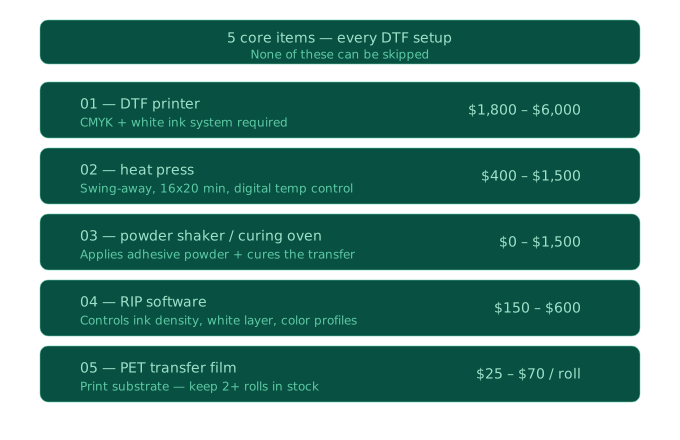
Every functional DTF operation requires the same five core components regardless of scale. You can run a profitable home-based business with entry-level versions of all five, or invest in professional-grade equipment from the start. What you cannot do is skip any of them and expect consistent, sellable output.
1. DTF Printer
The DTF printer is the centerpiece of your operation. It prints your design onto PET transfer film using CMYK inks plus a dedicated white ink layer. Without a white ink channel, DTF printing on dark fabrics is not possible — so any printer you consider must support a white ink system.
Entry-level operators most commonly start with a modified Epson L1800 ($1,800–$2,500) or move directly to a purpose-built A3+ DTF printer ($3,500–$6,000). For a detailed comparison of every major printer option at each price point, see our best DTF printers for small business guide.
Key specs to look for: A3+ print width minimum, dedicated white ink circulation system, and a printhead model with widely available replacement parts.
2. Heat Press
The heat press applies your cured transfer to the garment using heat and pressure. For DTF transfers, you need a press that reaches 280–320°F with even, consistent pressure across the entire platen. Uneven pressure is the leading cause of transfer failures and peeling edges on finished garments.
A quality swing-away press in the 16×20 inch range costs between $400 and $700 at entry level and $800–$1,500 for a mid-range professional unit. Look for digital temperature control accurate to within ±5°F and a pressure adjustment knob. Avoid spring-loaded clamshell presses for production use — they cannot maintain consistent pressure across the platen.
3. Powder Shaker or Curing Oven
After printing onto PET film, your design needs to be coated with hot melt adhesive powder and cured before pressing. This step is non-negotiable — it is what makes the transfer bond to fabric. Skipping or rushing it produces transfers that will not adhere or will peel within a few washes.
There are three approaches at different budget levels. A basic oven with manual powder application works as a zero-cost starting point but requires more hands-on time. A semi-automatic powder shaker ($350–$500) applies powder mechanically with a built-in curing element, significantly improving consistency. A full automatic powder shaker with integrated oven ($800–$1,500) handles the entire process with minimal operator involvement and is the right choice for any operator producing more than 15 sheets per day.
4. RIP Software
RIP (Raster Image Processing) software is the bridge between your design files and your DTF printer. It controls white ink density, CMYK color profiles, print speed, and ink layering order. Printing directly from Photoshop or Illustrator without RIP software produces oversaturated transfers, inconsistent white under-base layers, and dramatically shortened printhead life.
Popular options include Kothari Print PRO ($150–$300 one-time), Wasatch SoftRIP ($400–$600), and Maintop ($200–$400). Many purpose-built DTF printers include a bundled RIP license — confirm this before purchasing separately.
5. PET Transfer Film
PET film is the substrate your designs are printed onto before transfer. Film quality directly affects transfer quality — low-grade film causes ink adhesion problems and inconsistent powder coating. Reputable rolls cost $25–$70 per 100-meter roll depending on width. At moderate production volume (15–20 sheets per day), you will go through approximately one roll every 2–4 weeks. Always keep at least two rolls in stock to avoid production shutdowns.
Secondary Equipment: Add Within the First 90 Days
These items are not required on launch day but become important quickly as your production volume and quality standards grow.
Design computer or workstation. Any modern computer with 8GB+ RAM handles DTF design and RIP processing comfortably. If you are already working in graphic design, your existing setup likely qualifies.
Teflon pressing sheets. Teflon sheets ($15–$30 for a pack of 5) protect your heat press platen during pressing and prevent transfer edges from sticking. A low-cost item that prevents costly press damage.
Lint roller and pre-press spray bottle. Pre-pressing lint removal ensures clean transfer application. A lint roller and a spray bottle of water for pre-pressing cotton are both under $10 and used daily.
Garment taping supplies. Heat-resistant tape ($10–$20 per roll) keeps transfer edges aligned during pressing, especially important for large designs and all-over coverage.
Film storage rack or tubes. PET film rolls must be stored horizontally in a climate-controlled space to prevent warping. Dedicated horizontal shelving or storage tubes keep your film in production-ready condition.
Consumables: Your Monthly Reorder List
Beyond hardware, your DTF operation runs on a consistent supply of consumables. Running out of any of these shuts down production immediately.
DTF ink set (CMYK + white). White ink is your highest consumption ink and your most maintenance-intensive consumable. At moderate volume, budget $150–$300/month for ink. Always buy from your printer’s recommended supplier — counterfeit ink causes printhead clogging that can cost $300–$600 to repair.
Hot melt adhesive powder. The adhesive powder that bonds your transfer to fabric. A 1kg bag costs $15–$30 and covers approximately 80–150 standard gang sheets depending on coverage. Budget one bag per week at moderate volume.
PET transfer film. See the core equipment section above. Reorder before your last roll — lead time from suppliers can run 3–7 business days.
Cleaning solution and maintenance kit. Printhead cleaning solution ($20–$40 per bottle) is required for regular maintenance cycles, especially for white ink. Most printers include a starter maintenance kit — replace it before it runs out.
Pressing parchment or silicone paper. Used between the transfer and the heat press platen for certain pressing applications. A pack of 100 sheets costs $15–$25 and lasts several weeks at normal volume.
DTF Equipment Cost Summary
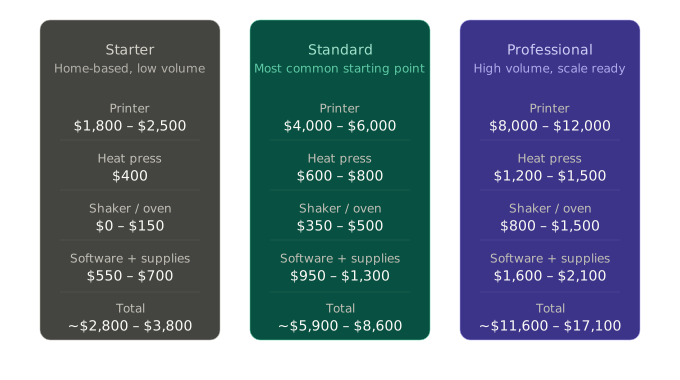
Here is a complete cost summary for the three most common setup tiers. For a full itemized cost breakdown including software, business setup, and first-year projections, see our DTF startup costs guide.
| Item | Starter | Standard | Professional |
| DTF printer | $1,800–$2,500 | $4,000–$6,000 | $8,000–$12,000 |
| Heat press | $400 | $600–$800 | $1,200–$1,500 |
| Powder shaker / oven | $0–$150 | $350–$500 | $800–$1,500 |
| RIP software | $150–$200 | $250–$400 | $400–$600 |
| Initial film + ink + powder | $400–$500 | $700–$900 | $1,200–$1,500 |
| Estimated total | $2,750–$3,850 | $5,900–$8,600 | $11,600–$17,100 |
5 Equipment Mistakes That Cost New DTF Operators Money
These are the purchasing and setup mistakes that show up repeatedly among operators who struggle in their first six months.
- Buying the cheapest printer available. Budget printers save money upfront but generate higher maintenance costs, more downtime, and shorter operational lifespans. The true cost of ownership on a $1,200 entry printer often exceeds a $3,500 mid-range unit within 18 months. See our how to start a DTF business from home guide for a full cost-of-ownership breakdown.
- Skipping the powder shaker and using a standard oven manually. This works for the first few weeks but becomes a production bottleneck at any meaningful volume. The $350–$500 investment in a semi-automatic shaker pays back within the first month of consistent production.
- Purchasing ink from the lowest-cost supplier. Counterfeit or incompatible ink is the single most common cause of premature printhead failure. A $150 printhead cleaning or $400 replacement because of bad ink is never worth the savings on ink.
- Not budgeting for monthly consumables. Many operators calculate their startup cost accurately but fail to set aside $300–$500/month for ongoing consumables. Running out of ink or film mid-order damages customer relationships and is entirely preventable with a simple reorder system.
- Underestimating heat press quality. A cheap spring-loaded press saves $200 at purchase but causes transfer failures, uneven pressure marks, and wasted materials. A quality swing-away press with consistent pressure is not an upgrade — it is a production requirement.
Frequently Asked Questions
What is the minimum equipment needed to start DTF printing?
At an absolute minimum: a DTF printer with white ink, a heat press, a way to cure powder (even a basic oven), RIP software, and PET transfer film. Skipping any of these five components makes it impossible to produce a finished, sellable transfer. The minimum functional setup costs between $2,500 and $3,500 at 2026 market prices.
Do I need a separate computer for DTF printing?
Not necessarily a dedicated machine, but your computer needs enough processing power to run RIP software smoothly — at least 8GB RAM and a modern processor. If your current computer handles standard graphic design work, it likely handles DTF workflows as well.
How often do DTF printheads need replacing?
Depending on ink quality and maintenance habits, DTF printheads typically last 6–18 months under regular production use. Consistent daily maintenance cycles significantly extend printhead life. Budget one replacement per year in your first-year financial projections.
Can I use a regular Cricut or vinyl heat press for DTF transfers?
Most consumer-grade Cricut and similar craft presses do not maintain consistent temperature and pressure across the platen and are not recommended for production DTF work. A dedicated swing-away or clamshell production press with digital temperature control is required for consistent professional results.
Where is the best place to buy DTF equipment?
Reputable DTF equipment suppliers in the US include Teejet, ColDesi, Coastal Business Supplies, and direct from manufacturers like Epson and xTool. Buy from suppliers who offer setup support, replacement parts availability, and a warranty on the equipment — not just the lowest listed price. For a full comparison of printer options, see our best DTF printers guide.
Conclusion
Your DTF printing equipment list is the foundation of everything your business produces. Getting it right from the start — choosing quality over the cheapest option, budgeting for consumables, and not skipping any of the five core components — is the difference between a setup that produces consistent, sellable output and one that generates frustration and rework from day one.
At imakedtf.com, we help DTF print shops and home-based operators build marketing systems that fill their production capacity. Get in touch →
A well-built DTF printing equipment list is not just a shopping checklist — it is the technical foundation of a scalable, profitable business.
Last Updated: April 2026 | Related: How to Start a DTF Business from Home | DTF Startup Costs | Best DTF Printers for Small Business | DTF Printing Business Guide